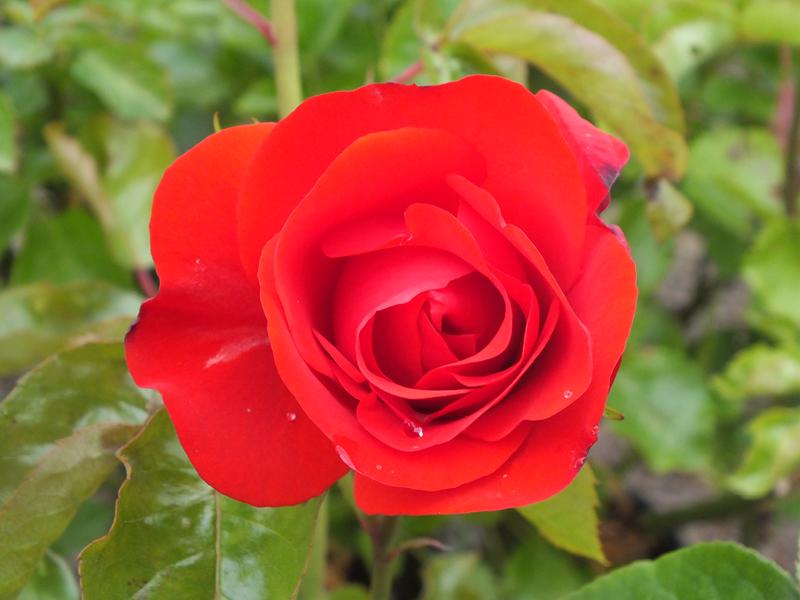

Rosa floribunda Trumpeter ‘Mactru’ (standard)Standard Rose
£59.99
Out of stock
Overview
Standard Rose Trumpeter ‘Mactru’ produces clusters of bright red double blooms in summer.
Standard roses (or tree roses) are budded onto a stem (or trunk) and are a wonderful way to create height in a rose border. For best effect, it is important to make sure the surrounding roses are lower growing than the stem length of the standard. Standard roses also make superb focal points for mixed borders in small gardens, adding height where needed without dominating the overall design or casting too much shade.
English roses are renowned for the beauty of their repeat-flowering fragrant blooms as well as good vigour and disease resistance. They typically begin flowering from June onwards. Give them an open sunny position and any deep well-drained soil including clay. They need plenty of nutrients so add Bonemeal and garden compost or well-rotted manure when planting. Rootgrow (mycorrhizal beneficial fungi) sprinkled on the roots will aid root development. Use a rose fertiliser such as Toprose during the growing season. Newly planted English roses need little initial pruning other than a light trim and the removal of any dead, diseased, rubbing and crossing stems. Once established they can be pruned in early March to approximately half their size, aiming to create a shapely rounded head.
Prune out any dead or weak stems. In addition they may be summer-pruned: after each flush of flowers has finished, cutting back the flowering stems to two or three sets of leaves. Suckers can develop from both the roots and the trunk and should be removed. A standard rose must always be securely staked because the weight of the rose, especially when in flower, which could cause the trunk to bend and snap. Use a wooden stake long enough to reach into the head of the rose and secure with a small tree tie with a spacer between the stem and the stake to prevent rubbing. Weeping Standards Weeping Standard roses are useful if you want to create a stunning focal point in the garden or lawn, usually best used as a single specimen. They will add height and colour where needed without dominating the overall design or casting too much shade.
Flowering Months
| Jan | Feb | Mar | Apr | May | Jun | Jul | Aug | Sep | Oct | Nov | Dec |
|---|---|---|---|---|---|---|---|---|---|---|---|
| No | No | No | No | No | Yes | Yes | Yes | Yes | No | No | No |
| Flower Colour | Red |
|---|---|
| Availability Date Learn more | late-October to July |
| Flower Type | Double |
| Flowering Month | June, July, August, September |
| Soil Type | Acid, Alkaline, Heavy clay, Normal |
| Aspect | Sun |
| Hardiness Learn more | Hardy |
| Award | |
| Foliage Type | Deciduous |
| Foliage Colour | Green |
| Height after 10 years* Learn more | Stem 80cm (2ft 6ins) |
| Pot Size Learn more | 7.5 Litre. Bare root potted. |
| Special Attributes |
You may also be interested in



Quality you can trust