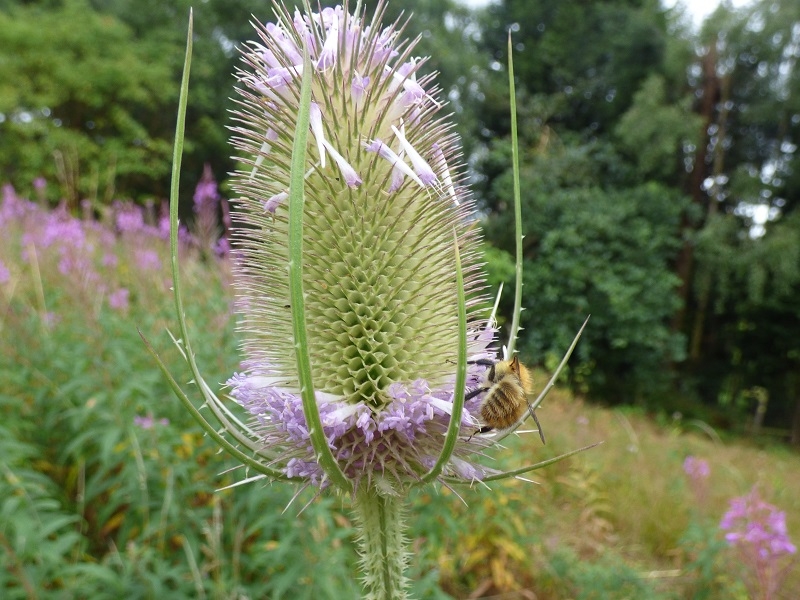
Common Teasel (Dipsacus fullonum)
£3.30
In stock
Overview
Tall biennial which produces large flowering heads on tall spiny stems in the second year. Excellent wildife value for bees when flowering and for birds, particularly goldfinches, when in seed. Dried seed heads can be used in flower arrangements.
- Speedy Delivery
- Click & Collect
Common Teasel
All wildflowers are grown from seed on site. Where possible, seed is collected from the Wildlife Meadow at John’s Garden, here at Ashwood Nurseries. Otherwise wildflowers are sourced from British suppliers.
Wildflowers are best planted in the spring or autumn. They can be planted in the summer if kept well watered. Wildflowers include hardy perennials that can withstand harsh winters, and hardy annuals which will readily set seed and produce flowering plants the following year.
Flowering Months
| Jan | Feb | Mar | Apr | May | Jun | Jul | Aug | Sep | Oct | Nov | Dec |
|---|---|---|---|---|---|---|---|---|---|---|---|
| No | No | No | No | No | Yes | Yes | Yes | Yes | No | No | No |
| Aspect | Sun, Partial Shade |
|---|---|
| Flower Colour | Blue, Lavender |
| Flower Type | Cluster |
| Flowering Month | June, July, August, September |
| Foliage Type | Deciduous |
| Foliage Colour | Green |
| Hardiness Learn more | Hardy |
| Height after 10 years* Learn more | 1.5-2m (5-6ft) |
| Pot Size Learn more | 9 cm |
| Soil Type | Acid, Alkaline, Heavy clay, Light sandy, Normal, Thin chalky |
| Special Conditions | |
| Special Attributes | Fast growing, Architectural, Bee friendly, Attractive to butterflies and moths |
| Uses |
You may also be interested in
Quality you can trust