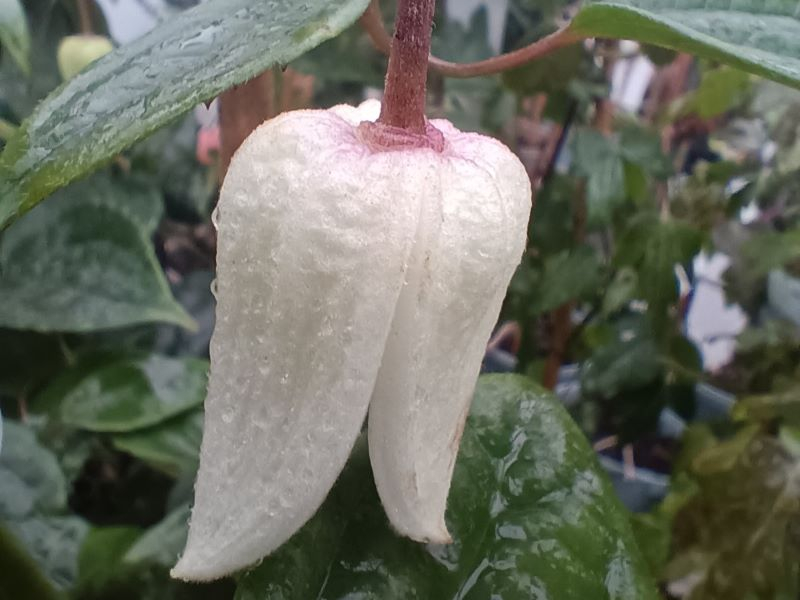
Clematis urophylla ‘Winter Beauty’
£24.50
In stock
Overview
‘Winter Beauty’ is an evergreen climber with lush, dark foliage. It produces a mass of small bright green buds that develop into creamy-white nodding flowers with soft yellow anthers. This clematis flowers during the winter months, making it ideal for adding colour and interest in the garden during winter. It needs a warm sheltered spot for best results.
- Speedy Delivery
- Click & Collect
This clematis belongs to (Pruning Group 1), as it flowers early in the year on growth produced from the previous summer.
Pruning Group 1 Clematis require no regular pruning, and should only be pruned back hard in their first spring after planting. This is to encourage growth of multiple healthy stems.(If young plants are left unpruned, they tend to produce very long single stems with a small cluster of flowers at the top). Cut back to above a strong pair of leaf buds about 30cm (12in) above soil level. For regular maintenance, only prune after flowering in spring once the danger of frosts have passed.
Cultural information: Clematis perform best in a deep, rich soil that remains moist but well-drained. They like their heads in the sun but the base of the plant should be kept cool and shaded by other plants. Adding a mulch, such as garden compost, well rotted manure or bark chippings, will help reduce water loss and add nutrients to the soil. Plant your new clematis with the crown 5–8cm (2–3in) deep to encourage new shoots to grow from below ground level and keep it well watered during its first Spring and Summer. . Rootgrow (beneficial mycorrhizal beneficial fungi) sprinkled on the roots prior to planting will aid root development. Clematis are greedy feeders and benefit from regular feeding with Chempak Clematis Food.
Support: Clematis need to be well supported from the base upwards at all times as wind rock can cause the stems to break and wilt. They require a firm framework to grow on such as a trellis, obelisk or a pergola. During spring and summer, tie in young shoots using a soft tie such as Flexi-tie. Alternatively allow them to scramble through a large established shrub
Flowering Months
| Jan | Feb | Mar | Apr | May | Jun | Jul | Aug | Sep | Oct | Nov | Dec |
|---|---|---|---|---|---|---|---|---|---|---|---|
| Yes | Yes | No | No | No | No | No | No | No | No | No | Yes |
| Flower Colour | Yellow, White, Cream |
|---|---|
| Availability Date Learn more | All year round |
| Flower Type | Single |
| Flowering Month | January, February, December |
| Soil Type | Alkaline, Heavy clay, Normal |
| Aspect | Sun |
| Hardiness Learn more | Hardy |
| Foliage Type | Evergreen |
| Foliage Colour | Green |
| Height after 10 years* Learn more | 2.5–4 metres (8-13ft) |
| Pot Size Learn more | 3 Litre |
| Uses | Arches, Pergolas and Obelisks, Low maintenance, Wall and fences |
You may also be interested in

Quality you can trust