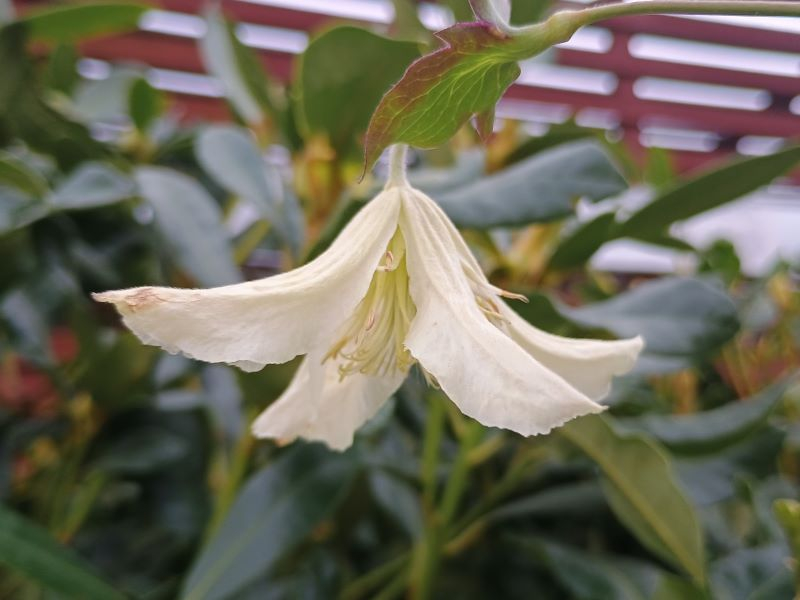
Clematis cirrhosa ‘Ourika Valley’
£22.95
Out of stock
Overview
C. cirrhosa ‘Ourika Valley’ is an early flowering evergreen climber. From late autumn into winter and as far into early spring it produces a mass of small bell-shaped flowers that are soft yellow in colour. The flowers are followed by silky seed heads in the spring. The foliage is an attractive dark green with bronzy tones on the underside. A good choice for a winter garden display and loved by bees and other early pollinators.
Clematis cirrhosa and its cultivars require a very warm, sunny sheltered position to perform well, in any fertile, well-drained soil. Unlike other clematis, the crown of the plant should be planted at soil level.
This Clematis belongs to (Pruning Group 1), as it flowers early in the year on growth from the previous summer.
Pruning
Group 1 Clematis require no regular pruning. They should only be pruned back hard in the first spring after planting. This is to encourage growth of multiple healthy stems. (If young plants are left unpruned, they produce very long single stems with small clusters of flowers at the top). Cut back to above a strong pair of leaf buds about 30cm (12in) above soil level. For regular maintenance, only prune after flowering in spring once the danger of frosts has passed.
Cultural information
Clematis perform best in a deep, rich soil that remains moist but well-drained. They require a sunny position, with their roots in the shade of other plants. Adding a mulch, such as garden compost, well-rotted manure or bark chippings, will help reduce water loss and add nutrients to the soil. Plant your new clematis with the crown 5–8cm (2–3in) deep to encourage new shoots to grow from below ground level and keep it well watered during its first Spring and Summer. Rootgrow (beneficial mycorrhizal beneficial fungi) sprinkled on the roots prior to planting will aid root development. Clematis are hungry plants and benefit from regular feeding with Vitax Clematis Feed.
Support
Clematis need sturdy support from the base as wind rock can cause the stems to break and wilt. They require a firm framework to grow on such as a trellis, obelisk or a pergola. During spring and summer, tie in young shoots using a soft tie such as Flexi-tie. Alternatively allow them to scramble through a large established shrub to create a natural look.
Flowering Months
| Jan | Feb | Mar | Apr | May | Jun | Jul | Aug | Sep | Oct | Nov | Dec |
|---|---|---|---|---|---|---|---|---|---|---|---|
| Yes | Yes | No | No | No | No | No | No | No | No | Yes | Yes |
| Flower Colour | Yellow, White |
|---|---|
| Flower Type | Single |
| Flowering Month | January, February, November, December |
| Soil Type | Alkaline, Heavy clay, Normal |
| Aspect | Sun |
| Hardiness Learn more | Hardy |
| Foliage Type | Evergreen |
| Foliage Colour | Green, Bronze/purple |
| Height after 10 years* Learn more | 2.5–4 metres (8-13ft) |
| Pot Size Learn more | 3 Litre Deep |
| Special Attributes | Scented flowers, Bee friendly, Attractive to butterflies and moths |
| Uses | Arches, Pergolas and Obelisks, Low maintenance, Wall and fences |
Quality you can trust