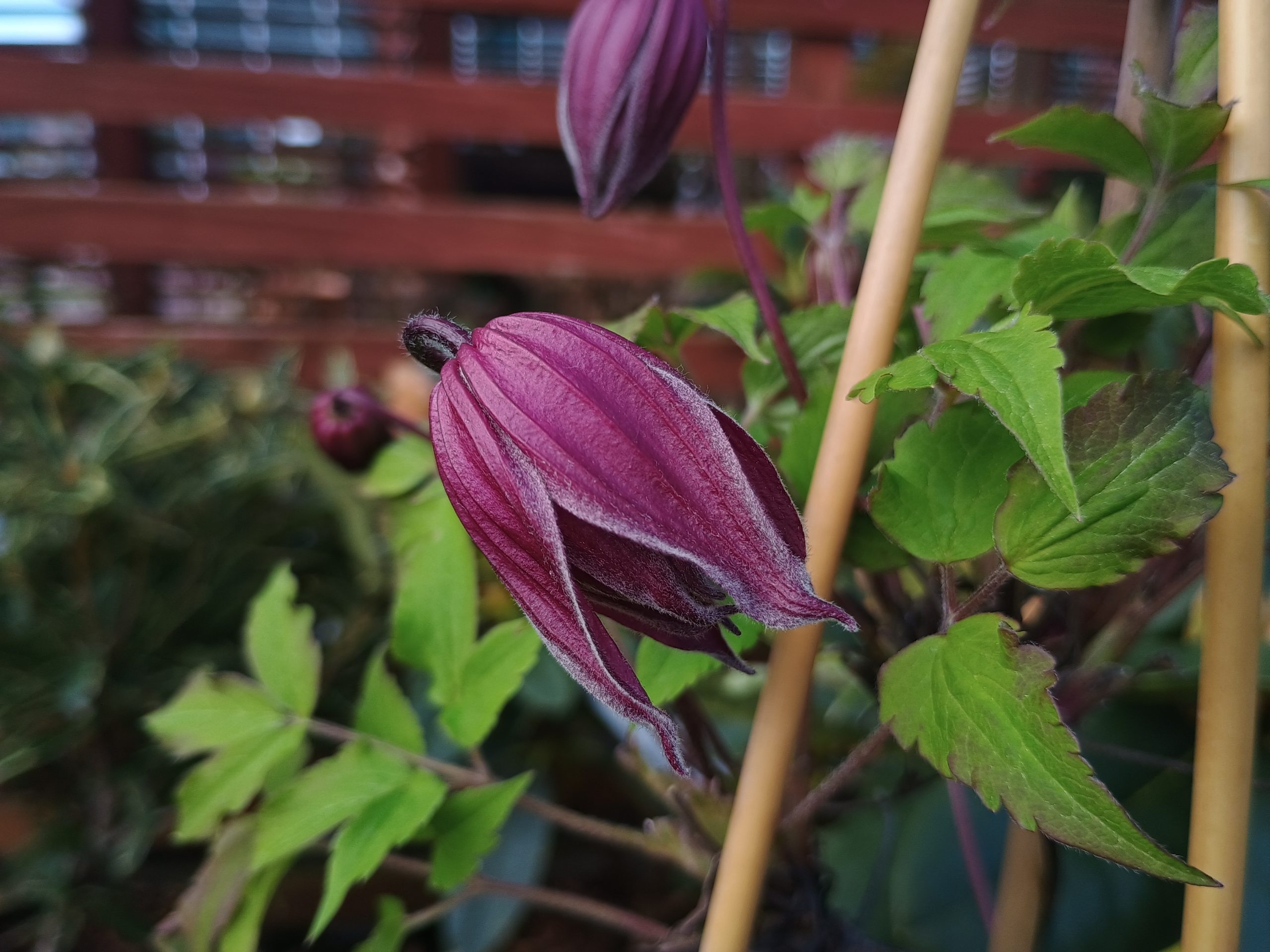
Clematis alpina ‘Cragside’
£18.95
Out of stock
Overview
‘Cragside’ is a deciduous climber with toothed-edged trifoliate leaves. Flowers are nodding with reddish-purple sepals and tepals, with white centre to the flower. An early flowering variety, ‘Cragside’ is excellent for adding spring colour to the garden.
This belongs to the alpina group of clematis. This is a European species that is very similar to the Chinese species macropetala. As a general rule C.alpina has single nodding flowers with four tepals whereas C. macropetala has semi-double nodding flowers. It is an early season clematis (Pruning Group 1) that flowers early in the year on previous summer growth.
Pruning: Group 1 clematis do not need regular pruning but may be pruned if necessary after flowering. Trim overlong branches and prune back dead or winter-damaged shoots to a pair of healthy buds. Old congested plants can be renovated by cutting all stems back almost to the base, just after flowering. To restore the plants vigour apply Blood, Fish and Bone, mulch and water in dry spells. Wait at least three years before pruning hard again.
Cultural information: Clematis alpina and its cultivars are extremely hardy and ideal for cold exposed positions. They perform best in a deep, rich soil that remains moist but well-drained; they like their heads in the sun but the base of the plant should be kept cool and shaded by other plants. A layer of pebbles at the base will also be beneficial. Plant your new clematis with the crown 5–8cm (2–3in) deep to encourage new shoots to grow from below ground level and keep it well watered during its first Spring and Summer. Clematis are greedy feeders and benefit from regular feeding with Chempak Clematis Food.
Support: Clematis need to be well supported from the base upwards at all times as wind rock can cause the stems to break and wilt: they require a firm framework to grow on such as a trellis, obelisk or pergola using clematis plastic netting as additional support. Regularly tie in young shoots using a soft tie such as Flexi-tie. Alternatively allow them to scramble through trees or large established shrubs.
Flowering Months
| Jan | Feb | Mar | Apr | May | Jun | Jul | Aug | Sep | Oct | Nov | Dec |
|---|---|---|---|---|---|---|---|---|---|---|---|
| No | No | No | Yes | Yes | Yes | No | No | No | No | No | No |
| Aspect | Sun, Partial Shade |
|---|---|
| Flower Colour | Red, Purple |
| Flower Type | Double |
| Flowering Month | April, May, June |
| Foliage Type | Deciduous |
| Foliage Colour | Green |
| Hardiness Learn more | Hardy |
| Height after 10 years* Learn more | 2.5–4 metres (8-13ft) |
| Pot Size Learn more | 2 Litre |
| Soil Type | Alkaline, Heavy clay, Normal |
| Special Attributes | |
| Uses |
Quality you can trust