Lewisias in the garden
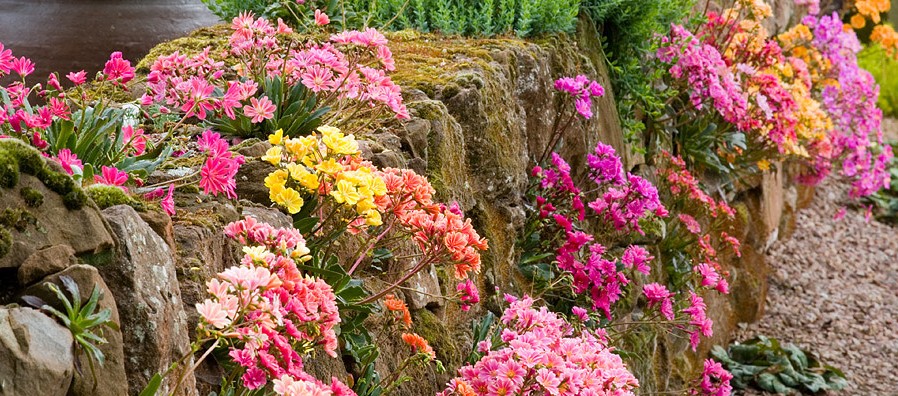
Lewisias are real show-stoppers in the garden, giving a spectacular show of brilliantly coloured flowers in spring, often followed by a second flush of flowers in summer. These have many uses in both the garden and alpine house and much can be learnt about their cultural requirements from looking at their habitat in the wild.
A bit about Lewisias
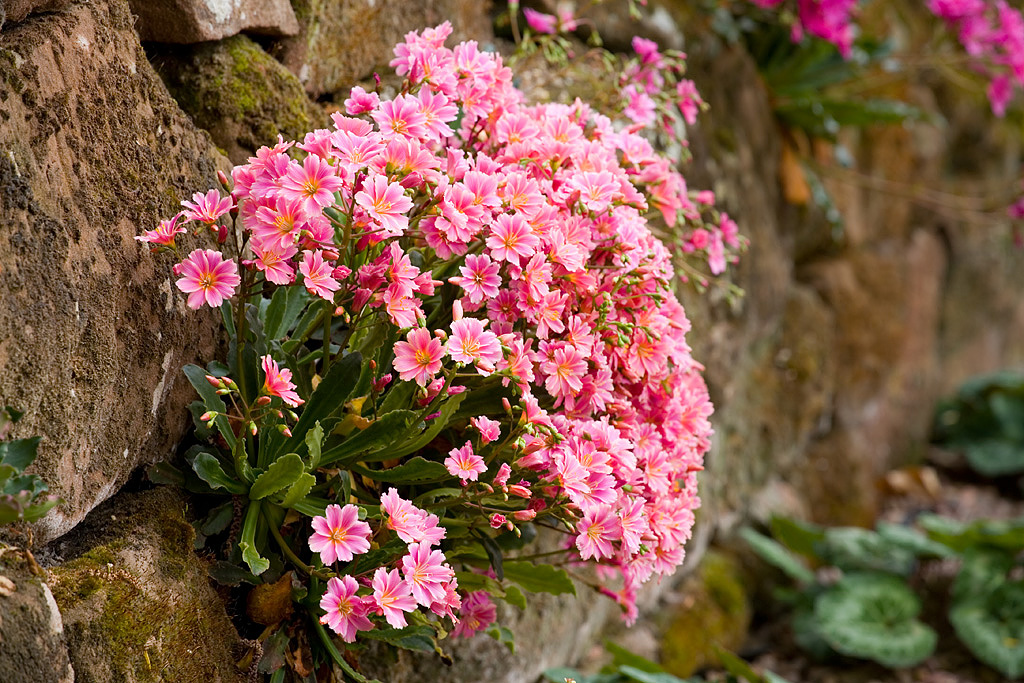
Lewisias are indigenous to the western parts of North America where they are found in spectacular natural landscapes, often clinging precariously to rocky ledges and among boulders on rock-strewn slopes. Some species occur in damp gravelly places, some in alpine meadows and others in desert-like conditions. Such is the diversity of this fascinating genus.
There are eighteen or so species, many of which are evergreen, but others have a resting period below ground for part of the year. They are all rosette-forming, dwarf hardy perennials. Several species have large showy flowers whilst others are smaller and intricate in detail: all with great charm and beauty. The evergreen species’ are all suitable for garden cultivation. We recommend that some of the more choice evergreen varieties as well as all deciduous species are grown in the protected environment of an alpine house.
Growing Lewisias in the garden
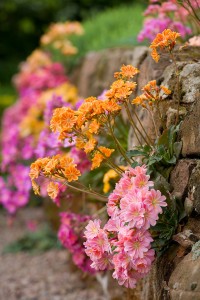
In the wild, the evergreen species are frequently found growing vertically in shady rocky crevices where the roots can reach moisture, but the collar of the plant remains perfectly drained. In the garden, try and replicate these conditions. Give them crevices in the rock garden, scree garden, dry stone wall. They are also perfect subjects for alpine sinks and informal planting schemes. Always plant them slightly tipped on their sides so that water drains away from the crown of the plant.
A well-drained soil or compost is essential, neutral to slightly acid if possible, with plenty of added grit. If growing in containers they should be fertilised with a sequestered iron feed to help maintain the compost acidity.
Lewisias are happiest in an open position that is protected from the sun during the hottest part of the day: a North-facing position is ideal. Remember that Lewisias are extremely frost hardy plants and it is excess wet which is their biggest enemy.
Lewisias we sell at Ashwood Nurseries
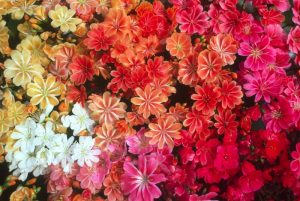
Lewisia cotyledon Ashwood Strain is the one of the most renowned of our plant introductions. As a result of careful selection and hand-pollination, these evergreen perennials are prized for their fine displays of flowers. They come in a wide range of vibrant colours including yellow, white, pink, magenta, red, orange and apricot. This includes our own cultivars: Ashwood Ruby and John’s Special which are propagated by cuttings. Their main flowering period is April to May, but they frequently produce a second flush in late summer. Height: 15-23cm (6-9ins).
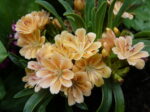
Lewisia ‘Ashwood Carousel Hybrids’ are exclusive to Ashwood Nurseries. Whilst they are much smaller than other Lewisias, they have a prolonged flowering period and are less demanding in their requirements. They are truly weather resistant and require little maintenance. They are available in a wide range of colours from yellow, apricot and orange to salmon, pink and magenta. Their flowers are produced in great profusion from April to June, often with a second flush in late summer. They do not set seed. Their attractive evergreen foliage is held in rosettes. Height 10cm (4ins).
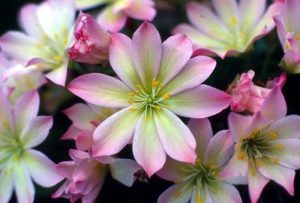
Other Lewisia species and cultivars are represented in our National Collection. Some of these, like Lewisia rediviva and Lewisia tweedyi, have large showy flowers. Others such as Lewisia nevadensis and Lewisia pygmaea are hidden little gems. We propagate from the collection, with plants in limited numbers made available to purchase. Most species and cultivars will be of interest to specialist alpine collectors who can provide the conditions in the alpine house to enable them to thrive. Please contact us if are looking for any particular Lewisia, we may well be able to help.
You may also be interested in: How to sow Lewisia seed