How to Grow Heathers
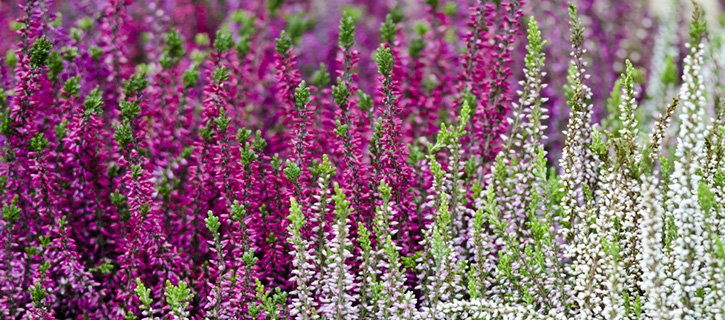
Heathers, or heaths, are easy to grow and are ideal for most gardens, especially where space is limited. They small hardy shrubs that provide flower and foliage colour all year round, as well as being very attractive to pollinating insects.
Types of heathers
 Winter-flowering heathers, such as Erica carnea and Erica x darleyensis varieties, play a valuable role during winter and early spring. They make good companions for early flowering plants such as hellebores, cyclamen and spring bulbs like tulips and daffodils. They are also valuable to early pollinators, providing nectar rich flowers when other food sources can still be scarce.
 Summer flowering heathers (Calluna vulgaris) are very similar but generally provide colour from summer into autumn. They produce a profusions of flowers, lightly scented, nectar-rich and adored by bees. They are drought resistant, so evermore valuable to planting schemes when hosepipe bans are becoming more common.
Planting Advice
Our heathers are container grown and can be planted at any time of the year, except during drought or frost. Planting distances may vary, depending on personal preference, you may want rapid ground cover or you may want individual specimen plants. Most heathers will a spread of around twice their ultimate height.
Soil/Compost: Heathers thrive best in acidic, free-draining soils with a high sand composition, however they will tolerate most soil types. Do not plant them in alkaline soils. Use ericaceous compost when planting in containers. Always plant deep enough for the lower foliage to rest on the soil. Firm using your hands, not feet or a trowel which may damage the delicate roots. Give every plant a thorough soaking after planting.
Aspect: Plant in open, sunny positions. All golden foliage varieties should be planted in full sun to produce bright foliage colours.
Pruning: Most species only need the occasional tidy when they grow out of shape. This should be done in early spring. Calluna vulgaris varieties should have dead flower spikes removed every March to avoid the plants becoming leggy and woody. Never cut back hard into old wood or there will be little or no new growth.
Aftercare: Avoid letting plants dry out in their first season after planting. Apply natural fertilisers, such as bonemeal, to help improve plant growth. Top-dress with a good quality mulch or ericaceous compost every year.