Growing Conifers
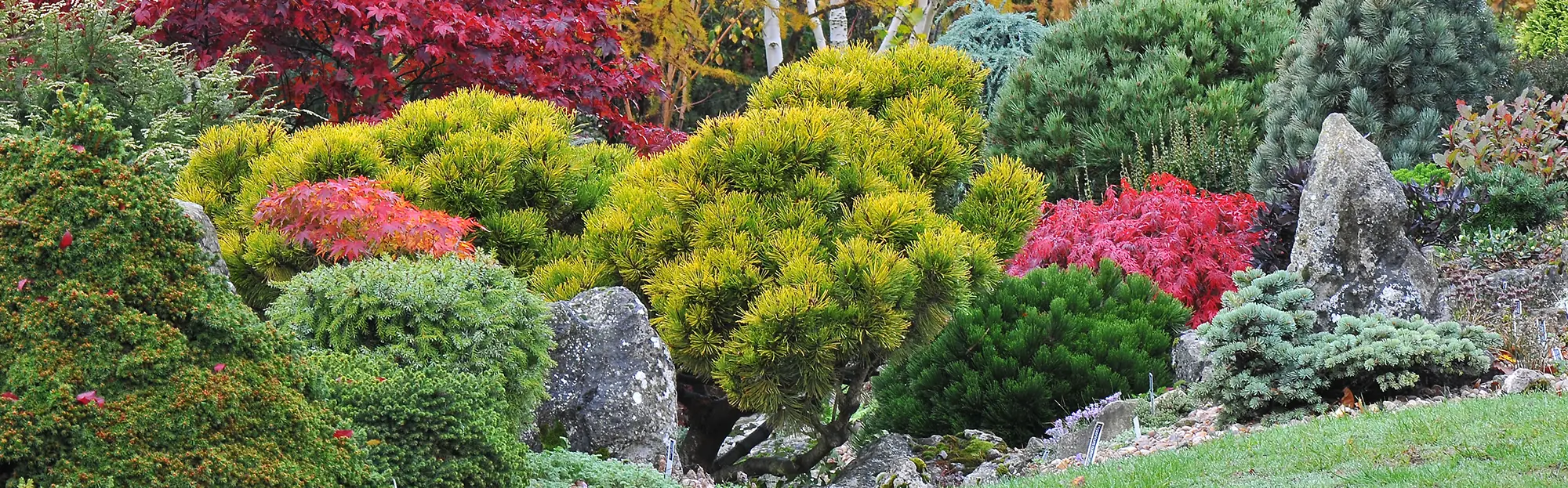
Ashwood Nurseries has specialised in conifers since 1967, with a particular speciality in dwarf and slow growing varieties, many of which are rare or ‘hard to find’. A good many of our conifers are grown here on the nursery but we also buy from some of the best wholesale specialist growers in the UK and Holland.
Dwarf and Slow-growing Conifers
 We stock a wide range of dwarf and slow-growing conifers which are ideal for smaller gardens. They can be used in a rock garden setting to create shape and structure amongst alpines, heathers and hardy cyclamen. Alternatively they can be planted amongst dwarf shrubs for a neat planting scheme, either as front-of-border planting or for creating multi-layered designs. With proper care, they can make good subjects for containers. Most of the dwarf varieties are better grown in acidic compost, whether in a container or the ground.
Some of our conifers, like Abies, Pinus and Picea varieties, are grafted. Grafted conifers are specialised plants where the conifer variety (scion) is joined onto a well-established rootstock. This technique is used to propagate rare/unusual varieties that are difficult to grow from cuttings.
Hedging varieties
 Conifers such as Cupressocyparis leylandii and Thuja plicata varieties make excellent large hedges for the garden. They are vigorous growing and will quickly form dense screens when kept well pruned, but overall require very little maintenance. We stock leylandii varieties such as ‘Gold Rider’, which offers bright yellow foliage all year when planted in a sunny position, and is less vigorous than the traditional green form. A popular hedging option is Thuja plicata ‘Martin’, which offers a barrier of dark glossy green foliage that bronzes in cold weather. Our large hedging plants are stocked in both small (~1m) and large (+2m) sizes.
 Alternatively smaller varieties such as Podocarpus and Taxus baccata make great smaller hedges. Podocarpus is a small, evergreen, drought-resistant conifer. They come in many varieties displaying wonderful foliage colour, both in spring on new growth and in winter after hard frosts. They are ideal for pruning into narrow informal hedges and forming wind-breaks in exposed areas. Alternatively our native Yew is ideal for most garden settings as they will tolerate most soil types. They can be pruned into formal hedging or trimmed into fancy topiary. These varieties also make excellent alternatives to Buxus hedging.
Specimen Conifers
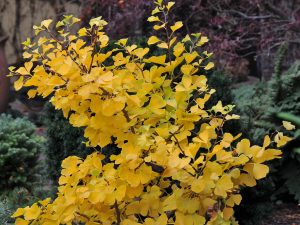
Larger-growing conifer specimens can make a great focal point in any garden. They can be planted as part of a border or as a lawn specimen, in groups or as a stand alone tree. Monterey pine can make a stunning centrepiece, whilst Cupressus sempervirens ‘Totem’ looks good as a standalone specimen or planted together as a group. We have many specimens in our show garden, like Metasequoia glyptostroboides ‘Gold Rush’ outside the Tea Room: a handsome conical tree with golden yellow fern-like foliage. John has many specimen conifers in his own garden such as Ginkgo biloba, Taxodiumdistichum ‘Peve Minaret’ and Taxus baccata ‘Standishii’, plus many more.
Planting Advice
When you receive your plants, please unpack them immediately. If they are dry, give them a water. The root ball must be moist for planting. We advise wearing gloves when handling conifers.
Planting: Dig out a hole suitable to accommodate the plant, making sure that the soil underneath is loosened. Avoid waterlogged ground. Add any humus material such as garden compost or well-rotted manure. For container planting, most conifers prefer an ericaceous compost. Avoid overpotting small plants.
Aspect: Most conifers like an open, sunny spot. They will tolerate some shade, but avoid planting very shaded areas.
Watering: Conifers are susceptible to being overwatered, especially when grown in containers. Watering after planting is essential, especially in spring and summer whist the plant is settling in. Once the conifer is well established you only need to water during long, dry periods.
Fertiliser: Bonemeal can be added into the growing medium to aid root development. A slow-release fertiliser can be used in spring, such as Miracle-Gro.