How to care for your new Hellebore
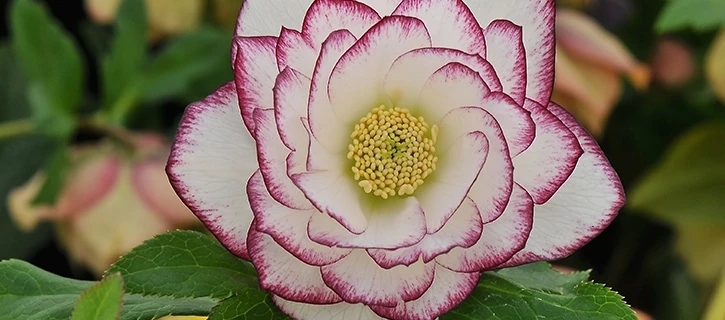
We are often asked how to care for new hellebore plants once you take them home from our nursery or when they arrive at your home via our mail order service. We hope the following advice covers everything you need to know:
On arrival
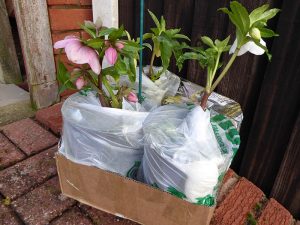
Please remove all the packaging from around your hellebore and stand your plant outside in a sheltered position, out of the wind. This includes during Winter. If the compost is dry, stand your plant in a saucer of water for an hour.
Plant as soon as possible! Hellebores are very hardy plants and will be happier in the ground than left standing in their pots.
If planting is delayed due to frozen or waterlogged ground conditions, it’s important to to remove flower stamens and petals that have fallen within the plant. This will help prevent grey mould (also known as botrytis) from forming around the base of the flower stems or within the crown. If your hellebore does become frosted and lies flat, it will defrost and recover as the weather warms- this is normal even when planted.
Where to plant
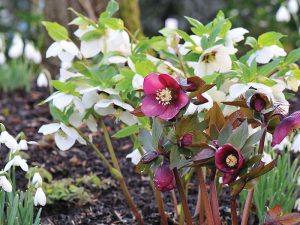
Hellebores are very tolerant as long as the ground is not extremely dry or waterlogged. They will grow in most soils, from slightly acidic through to slightly alkaline. They will tolerate drier conditions in summer providing there is some shade. Too much shade all year round can reduce the number of flowers. With just a few exceptions, they are hardy in the UK, but prefer a sheltered site away from cold winds.
They are best grown amongst deciduous shrubs and trees which will give them plenty of light in Winter and Spring but which will provide some welcome shade in the Summer months. By planting your hellebores on a sloping bed, you will naturally improve the drainage and make it much easier to look into the flowers.
Growing hellebores in containers
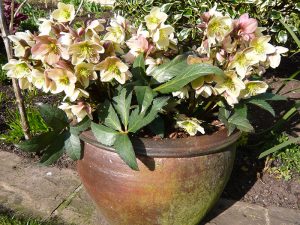
Hellebores are naturally deep rooting plants. Choose a container that has a good depth and with a wider top than base to ensure you can easily remove the plant when re-potting. The container should only be a little bigger than the existing pot otherwise you risk it become waterlogged in soggy unused compost.
Use a good quality compost with extra grit for drainage. They are hungry plants and will need regular watering and feeding with a high potash fertiliser in summer. Position the container where you can enjoy the flowers, then move it in Summer to a semi-shaded position. Re-pot every couple of years with fresh compost, or preferably plant out directly in the garden.
Soil preparation and planting
Hellebores are deep rooted and need plenty of nutrients. Dig your soil as deeply as possible and mix in plenty of humus, in the form of leaf mould, spent mushroom compost, garden compost or well-rotted manure. Avoid soil preparation when the ground is frozen or waterlogged, wait until conditions improve before planting out.
If your hellebore is dry, water well from below before planting. Dig your hole deeper and wider than the pot. Carefully remove the hellebore from its pot, sprinkle Rootgrow mycorrhizal fungi on to the root if desired. There is no need to tease out the roots as this causes unnecessary damage to their fibrous root system. Water well after planting. If planting in groups, we advise at least 60cm (24 inches) between plants.
Aftercare
Remember to keep your newly-planted hellebores well-watered during their first year. Apply an annual mulch of humus in July/August (when next year’s flower buds are being formed) and again in late December. Be careful not to mulch into the crown of the plant as this can cause the buds to rot. In Spring work in some calcified seaweed fertiliser and blood, fish and bone. Remove the old faded flower stems usually around March/April, unless you require seed, to encourage next year’s developing new growth.
Removing old foliage
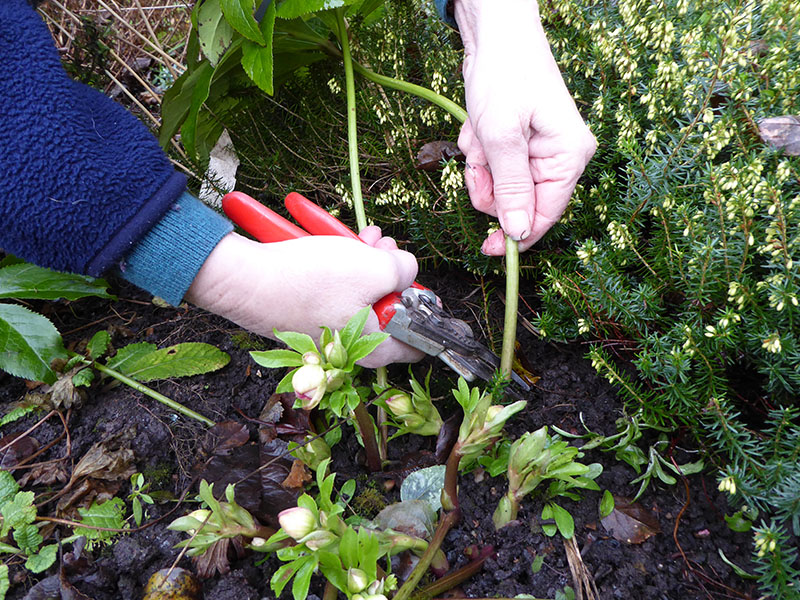
H. x hybridus Ashwood Garden Hybrids and deciduous species: remove all foliage to the base in late December/ January. This reduces the risk of infecting the new season’s growth with any overwintering pests and diseases.
Evergreen species and interspecies hybrids: (including Rodney Davey Marbled Group, H. x ericsmithii, H. x sternii, H. argutifolius and H. foetidus). Remove damaged or diseased foliage only as needed to tidy them up in late Autumn. In late Spring remove old flower stems and leaves back to the base to reveal new young growth at the base.
H. niger: after flowering, remove only the old flower stems, damaged or diseased foliage as needed to tidy them up.
Moving or splitting established hellebores
If you wish to move your plant or it becomes too big, you can lift and divide it in September. The whole plant should be dug up very carefully. When splitting, the large root system is far easier to handle if all the soil is washed off. Divide the root ball up using a knife or small saw, separating out into single crowns. Re-plant the crowns in well-prepared soil and keep shaded and moist. New divisions may take a few years to recover.